

Hormones act as messengers in our body, informing our muscles and organs how they need to work and when they need to take action.
Hormone imbalances that affect the scalp and hair growth can come as a result of several concerns, including thyroid conditions, inadequate levels of estrogen, menopause, weight changes and androgenetic alopecia.
In this guide, you will learn more about which hormones can lead to hair loss and what you can do to “fix” this problem.
Which Hormones Cause Hair Loss?
Some of the hormones that may cause hair loss include:
Testosterone and Dihydrotestosterone
Dihydrotestosterone, or DHT, is a sex hormone and a byproduct of testosterone. It is believed to play a role in the development of both male and female androgenetic alopecia — the most common type of hair loss.
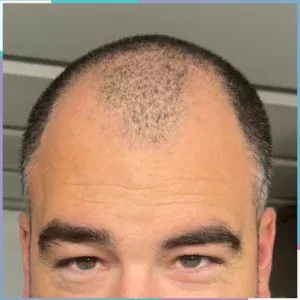
DHT negatively affects the hair growth cycle and results in the shrinking of the hair follicles. Eventually, it causes permanent hair loss.
Oestrogen
The female hormone oestrogen also affects the growth of hair follicles, and hair loss can occur when the balance of this hormone is disrupted.
For instance, during pregnancy, the levels of oestrogen continue to increase, reaching a peak in the last trimester. According to a study published in the International Journal of Molecular Sciences, the “high levels of estrogen, progesterone, prolactin, and growth factors” in pregnancy result in “increases in the hair growth, in the hair diameter, and in the anagen/telogen ratio.”
Following childbirth, however, the levels of oestrogen and progesterone drop, which can result in a type of hair loss called telogen effluvium. It results in diffuse thinning but is usually temporary.
Menopause is another period in a woman’s life when the levels of oestrogen drop, and it’s believed that menopause plays a role in the development of female pattern baldness.
Cortisol
Cortisol is a steroid hormone that’s produced by the adrenal glands in the body in response to stress. It’s the main hormone that the body releases when it’s in “fight or flight.”
According to a 2022 study, cortisol can affect the “function and cyclic regulation of the hair follicle.” A high level of this hormone may cause a reduction in the production and degradation of certain molecules significant to the activity of the hair follicles.
The researchers also report that corticotropin-releasing hormone (which regulates stress response and is involved in the release of cortisol) greatly limits the growth of hair shafts.
Keep in mind that, in general, stress has been linked to different types of hair loss, including:
- Telogen effluvium: a type of hair loss which results in diffuse shedding 2 to 4 months after the triggering event.
- Trichotillomania: a compulsive pulling of one’s hair from the scalp, face or even the body.
- Alopecia areata: an autoimmune condition that typically results in the formation of bald circular patches.
Thyroid Hormones
A 2023 research study a link between different types of hair loss and thyroid issues — some of them are as follows:
- Telogen effluvium: Both hypothyroidism and hyperthyroidism can result in hair shedding. Furthermore, hypothyroidism can cause the hair to become dry and brittle, whereas hyperthyroidism can affect the tenacity of the hair shafts.
- Alopecia areata: One of the things noted by researchers of the study is that autoimmune thyroid diseases are more commonly seen in people with alopecia areata. Additionally, they are more likely to experience thyroid dysfunctions like borderline overactive thyroid and borderline underactive thyroid.
The study also noted that thyroid cancer may cause alopecia or thinning in some people.
Growth Hormone
Growth hormone deficiency has been linked to hair loss, telogen effluvium and a frontal recession, in addition to significant changes in the structure of the hair follicle like pili torti et canaliculi and trichorrhexis nodosa, according to one study.
Can Hormonal Hair Loss Be Reversed?
Whether or not hormonal hair loss can be reversed depends on the underlying cause of the problem.
For instance, if you have male pattern baldness due to the action of dihydrotestosterone (DHT) hormone, you may be able to reverse the hair loss with proper treatment.
On the other hand, telogen effluvium is a type of self-limiting and reversible hair loss, so your doctor may not recommend any treatment for it.
Hair loss from alopecia areata is also usually reversible. Also, hair can grow back if you’ve lost it due to trichotillomania, but that’s only possible if you haven’t permanently damaged the follicles.
If you have an underlying health problem, however, such as a thyroid issue, you must get that treated as well to allow your hair to grow back.
How Do You Know If Your Hair Loss Is Due To Hormones?
If you have hair loss, you should speak with your doctor to determine if there is a hormonal reason for it. Your doctor might possibly recommend a blood test to check for any hormonal imbalance.
How To Stop Hormonal Hair Loss?
Your treatment for hormonal hair loss will depend on what caused your hair loss in the first place. Treatment for androgenetic alopecia, for instance, can include:
- Minoxidil
- Finasteride
- Dutasteride
- Spironolactone
- Birth control pills (low androgen index)
- Platelet-rich plasma injections (PRP)
- Low-level laser therapy
- Hair transplant
A stress-induced hair loss may, however, need to be managed by exercising, getting enough rest, eating a balanced diet, and seeking professional assistance. Bear in mind that only your doctor can prepare the most suitable treatment plan for you, and the same goes for hair loss due to health conditions.
Experiencing Hair Loss?
For over a decade, Longevita has arranged surgical and non-surgical solutions for hair loss. We work with highly experienced teams and offer services in both London and Istanbul. If you’re interested in starting your journey with us, do not hesitate to get in touch!
Frequently Asked Questions
Yes, you can experience hair loss due to hormonal imbalance. The types of hair loss can be different, such as androgenetic alopecia, telogen effluvium, etc.
Though not always, it is possible for you to experience hair loss due to hormone replacement therapy.

Dr Cagla
Dr Cagla earned her medical degree at Trakya University’s Faculty of Medicine in Bulgaria and has almost 6 years of hair transplantation experience. She is a specialist in FUE, DHI and Sapphire hair transplants of the scalp, eyebrows and beard and has performed over 6,000 surgeries. Dr Cagla is multilingual, with fluency in English, Bulgarian and Turkish.
