
The eyebrows play an important role in contributing to facial symmetry and expressing our emotions. In addition, they prevent sweat and water from dripping into the eyes. It is possible, however, for some people to have sparse eyebrows, either due to genetics or other factors. This may, in turn, have a negative impact on their confidence and self-esteem. Fortunately, eyebrow transplants can give you thicker brows, but there are some concerns about the outcome of the procedure. This guide explains why that might be the case.
Can Eyebrows Be Transplanted?
The eyebrow area can be filled in by transplanting hair, typically from the scalp, for thicker, fuller, and denser brows.
Although the procedure gives permanent results, you should know that the results might not be to your complete satisfaction. The reason is that scalp hair has different characteristics than eyebrow hair. Therefore, even with the right technique, the achievement of a natural-looking and aesthetically pleasing result can be challenging.
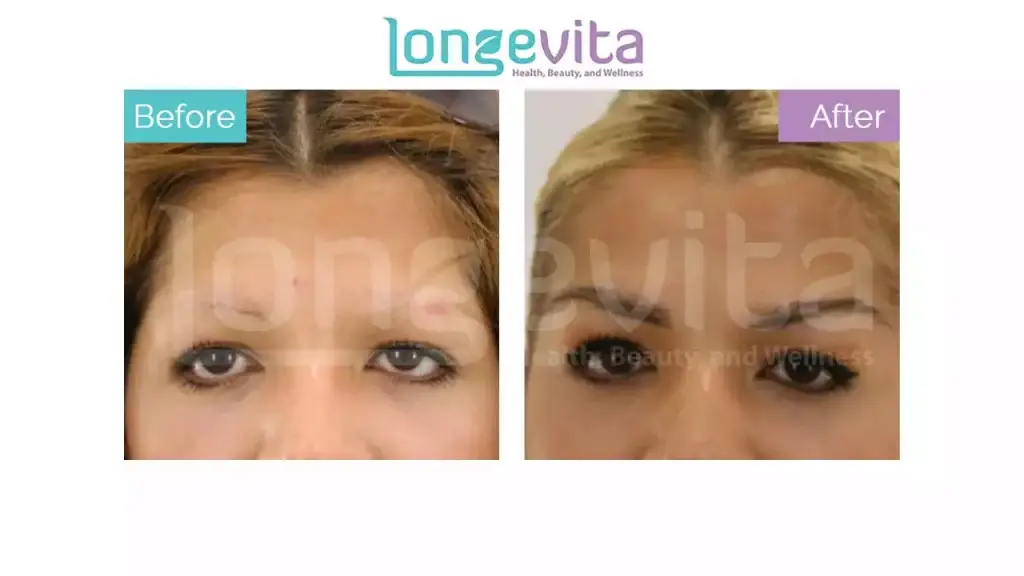
Who Is A Suitable Candidate For Eyebrow Transplant?
You can consider getting an eyebrow hair transplant if you’ve lost hair due to:
- Overplucking
- Trauma (accident or burns)
- Congenital absence of eyebrows
- Permanent hair removal treatment (e.g. electrolysis)
- Trichotillomania
- Frontal fibrosing alopecia
This list is not exhaustive. Note that eyebrow hair loss (madarosis) can also be caused by other problems, such as thyroid issues, skin conditions, infections, autoimmune conditions, chemotherapy/radiation therapy, and even ageing.
You do not need to undergo an eyebrow transplant surgery to address every kind of eyebrow hair loss; treatment can vary depending on the underlying cause. It is also possible that you will need to seek treatment for the underlying condition before you can have eyebrow transplantation.
How Do Eyebrow Transplants Work?
For eyebrow hair transplants, surgeons take hair grafts from another part of your body — typically the back of your scalp, but can also be the legs, beard, back, or pubic area — and implant them into the eyebrow area through small incisions.
The surgery is popularly performed using the FUE method of transplantation, in which donor harvesting is done through a small circular punch tool that avoids the need for sutures/staples. Though it is minimally invasive, it is performed under local anaesthesia, so you do not experience pain during the procedure.
In contrast, the more invasive FUT (follicular unit transplantation) method of hair transplant might also be used for donor harvesting in eyebrow restoration. However, this is only done when the scalp is being used as a donor area. The FUT, however, will require stitches, and it leaves a linear scar that is relatively noticeable, especially with short hair.
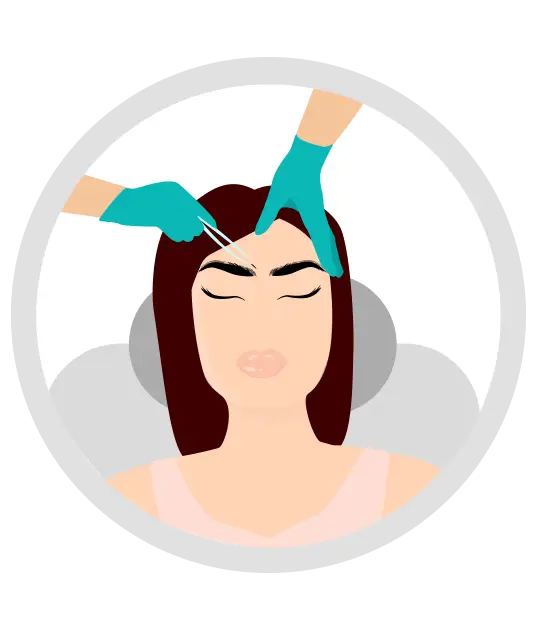
In Eyebrow Transplant Surgery, Choosing The Right Surgeon Is Crucial
An eyebrow transplant isn’t just about moving hair from one area of the body to another.
First and foremost, getting the eyebrow design right is imperative, which is quite different in both males and females. Where women’s eyebrows tend to be arched, men’s eyebrows are straighter and bushier at the centre.
Additionally, the number of hairs per graft is an important consideration. Usually, single-hair grafts are used for eyebrow restoration, though 2-hair grafts are used for the central area of the eyebrow.
The eyebrow hair also needs to be angled and placed in the right direction in all of its three sections (head, body and tail) so that the results look natural. For instance, the eyebrow hair starts growing vertically in the head before transitioning to horizontal in the body and tail end. The angle is also kept low during incision-making so the hair doesn’t grow straight out. Moreover, a “criss-cross” pattern is formed where the hair at the top and bottom come together and overlap in the middle.
Lastly, the density of the hair in the eyebrows also changes — it’s the highest in the body of the brow and lowest in the tail.
To help you achieve the best possible results, your surgeon needs to be aware of these and other intricate details. Take a look at the before and after photos of other patients who have been treated by your chosen practitioner to see what kind of results they have achieved.
How Many Grafts Are Used For Eyebrow Transplantation?
You may need around 100 and 500 grafts per brow for eyebrow restoration surgery. However, the final graft count can largely vary depending on the extent of hair loss and the aesthetic needs of the patient.
How Long Do Eyebrow Hair Transplants Take To Heal?
Eyebrow transplants can require a few days of downtime after which you can return to work — though you must check with your own doctor.
During recovery, you can experience some temporary discomforts, such as bruising and swelling (which can also occur around the lower eyelids). You can also experience “shock loss,” which results in temporary shedding of the transplanted hair, however, your hair should start to grow back in around 3-4 months. It can take a year for you to see the final results of your eyebrow hair transplant.
You should, however, bear in mind that an eyebrow transplant will require regular grooming. Your scalp hair will continue to grow even in the eyebrow, so you will need to trim the hair to enjoy the results of your treatment.
What Are The Potential Risks Of An Eyebrow Hair Transplant?
An eyebrow transplant is not without risks. Some of the potential complications of this surgery include:
Infection
Scarring
Poor result
Folliculitis
Ingrown hair
Talk to your doctor about all the risks associated with the procedure so that you can make an informed decision.
How Much Is An Eyebrow Transplant?
On average, eyebrow transplants can cost £4,000 in the UK. Though the surgery doesn’t require a large number of grafts, the procedure has a starting price, which can further vary depending on the experience of the medical team as well as the location of the clinic.
In this case, you can get micro-blading, where the practitioner creates hair-like strokes with tattoo ink. It gives the illusion of fuller brows.
What Are The Pros And Cons Of An Eyebrow Transplant?
Here’s a summary of some of the pros and cons of an eyebrow implantation procedure:
Pros
Increased density and fullness of eyebrows.
Permanent results.
Cons
Poor and unnatural results.
Frequent grooming is required.
What Are The Alternatives To An Eyebrow Transplant?
Some alternatives to eyebrow transplantation include:
- Microblading: A semi-permanent tattoo which essentially involves “drawing in” the eyebrows.
- Eyebrow tattoo: Unlike a semi-permanent tattoo, this is permanent and can also be used to create the illusion of fuller eyebrows.
- Latisse: Though it’s an FDA-approved drug for the growth of eyelash hair, it may also help with eyebrow hair. However, you must consult a medical professional about it.
Why Longevita Does Not Offer Eyebrow Transplants
Longevita does not offer nor recommend cosmetic eyebrow transplant surgeries due to the lack of satisfactory results obtained from this procedure. It’s because of the dissimilarity in the characteristics of the hair in the donor and recipient areas, therefore, beyond the control of the surgeon.
Experiencing Hair Loss?
CFor over a decade, Longevita has offered top-notch surgical and non-surgical solutions for hair loss. We arrange our services both in London and Istanbul with the best price guarantee. If you’re interested to learn more about the treatments we arrange, get in touch!
Frequently Asked Questions About Eyebrow Transplants
Find the answers of frequently asked questions about eyebrow transplants.

Dr Cagla
Dr Cagla earned her medical degree at Trakya University’s Faculty of Medicine in Bulgaria and has almost 6 years of hair transplantation experience. She is a specialist in FUE, DHI and Sapphire hair transplants of the scalp, eyebrows and beard and has performed over 6,000 surgeries. Dr Cagla is multilingual, with fluency in English, Bulgarian and Turkish.