
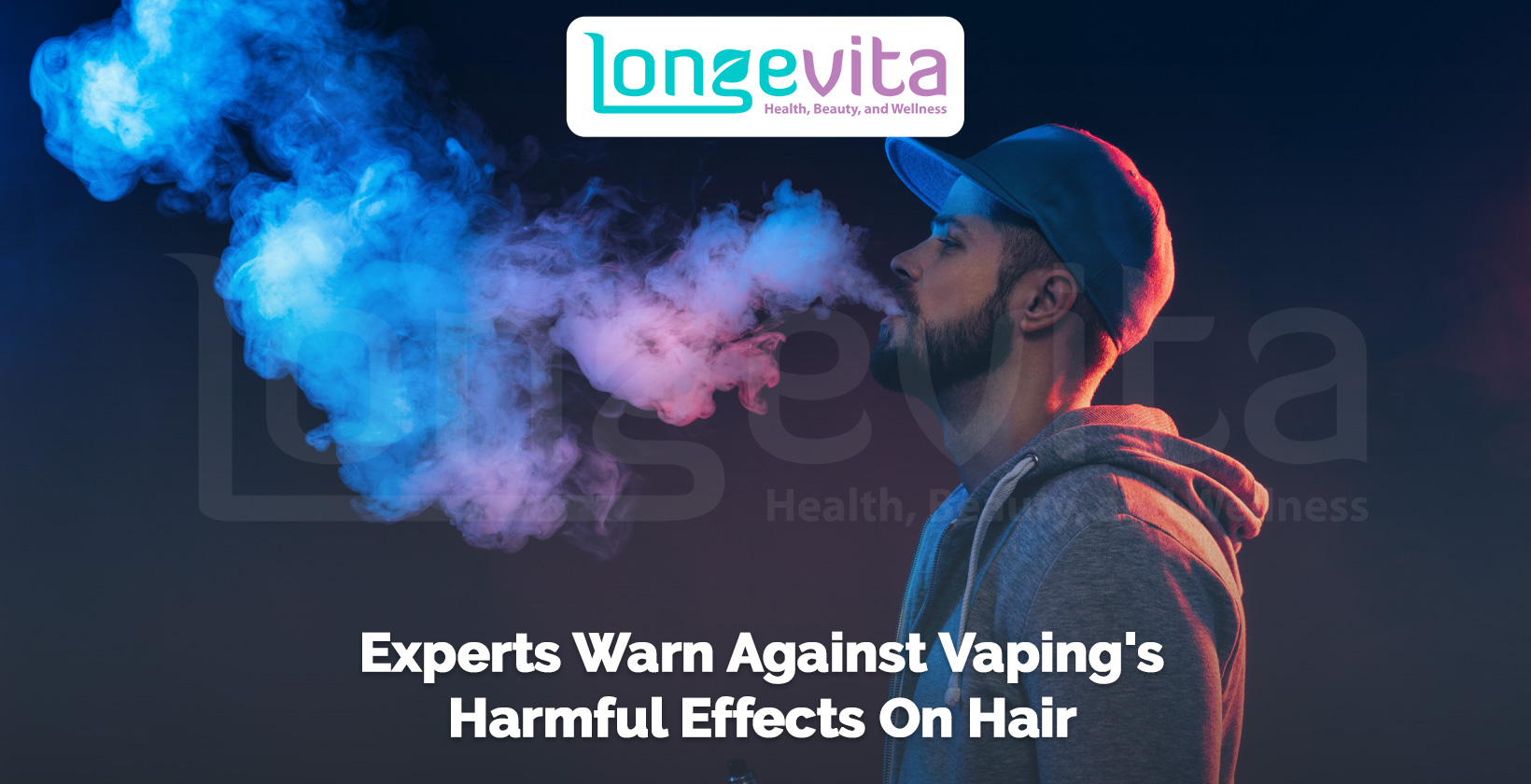
While vapes and e-cigarettes are considered a less harmful alternative to smoking, experts warn that, like their counterpart, they can still pose health risks — including damage to your hair.
Dr Hassan, a hair transplant surgeon and Dr Gizem, a medical aesthetician, caution that similar to smoking, there are a number of ways in which vaping can cause hair loss and even premature greying.
According to Dr Gizem, “Although vaping contains fewer harmful chemicals than smoking, nicotine is still present in them and that is not without its consequences.
To begin with, nicotine has a “vasoconstricting” effect, in other words, it narrows the blood vessels, reducing blood flow and, as a result, the supply of oxygen and nutrients to the hair.
We know from research that smoking has been linked to androgenetic alopecia, aka pattern baldness, with nicotine being considered as one of the culprits. Similarly, it’s possible for vaping to worsen pattern hair loss.”
The expert further explained that the nicotine in vapes can also increase the level of free radicals in the body, resulting in oxidative stress and premature hair greying.
“Additionally, the inflammation from nicotine may cause another type of hair loss called alopecia areata in which the body’s immune system starts attacking healthy hair follicles,” she added.
This sentiment was echoed by Dr Hassan who added that he even discourages his patients from vaping after a hair restoration surgery as it can impair postoperative wound healing.
“For at least 2 weeks after their surgery, I ask my patients to avoid any kind of e-cigarettes, as well as traditional cigarettes. That’s because it’s important for the newly transplanted grafts on the scalp to get a proper blood supply. Otherwise, it can have a negative impact on their growth,” said the doctor.
Dr Hassan also emphasised the potential risk of thermal or chemical burns from vaping as well as its detrimental effects on the health of the skin.
“There’s a whole bunch of very harmful chemicals in vapes. It has acrolein, which is used as a pesticide, in addition to cancer-causing formaldehyde and heavy metals like arsenic, lead and tin — which, by the way, are substances to watch out for even in nicotine-free vapes. In any case, it’s obviously bad news for your skin and your overall health, and it’ll affect your hair as well.”
The first thing that you need to do in order to protect yourself is to, of course, quit vaping, according to Dr Gizem. “Once you quit vaping, it will allow your hair follicles to recover and improve the overall health of your hair — similar to what would happen if you were to quit smoking. And so, successful recovery is possible.” Additionally, Dr Hassan urged those who vape to visit a healthcare professional for a health check-up.
For treatments, Dr Gizem recommended several therapeutic interventions to stop this kind of hair loss, starting first and foremost with lifestyle changes.
“It’s imperative to maintain a healthy and balanced diet when using e-cigarettes because nicotine can suppress your appetite, which can lead to nutritional problems. But along with that, you should take really good care of your scalp’s health and have a gentle hair care regime that doesn’t involve putting any tension on your hair follicles.”
Noting how many people vape as a way of coping with stress, Dr Gizem also suggested looking for healthier alternatives, such as meditation, yoga, exercise and a good night’s sleep.
“Medications such as minoxidil and finasteride might also be of help, as well as the use of an anti-oxidant rich shampoo to counter some of that oxidative stress.”
Finally, the hair pro also believes that certain non-surgical treatment options like low-level laser therapy, Platelet-rich plasma (PRP) to stimulate hair growth, and even microneedling can help promote hair growth.
Dr Hassan
Based in London, Dr Hassan is a highly qualified plastic surgeon with over decades of experience. He is well-accomplished and experienced in the art of hair transplantation surgery, and his specialities include non-surgical treatments, such as platelet-rich plasma (PRP) injections for the scalp. Dr Hassan can always be counted on to achieve the best possible outcomes for his patients.
Dr Hassan is an independent, GMC-registered plastic surgeon (GMC: 6107783) with over 20 years of experience in hair restoration and cosmetic surgery. He performs his hair transplant procedures at Kensington Cosmetic Clinic, a CQC-registered (1-14206333213) independent hospital in London.
