

People often experience hair loss around their temples, and there are many reasons why that can happen. This type of hair loss can also be especially concerning since the temples cannot be easily hidden. In this guide, you’ll learn more about the causes, treatment, reversibility and prevention of temporal alopecia.
Where’s The Temple Area Of The Scalp?
The temple area is the area on the side of the head above the ears and between the eyes and the forehead.
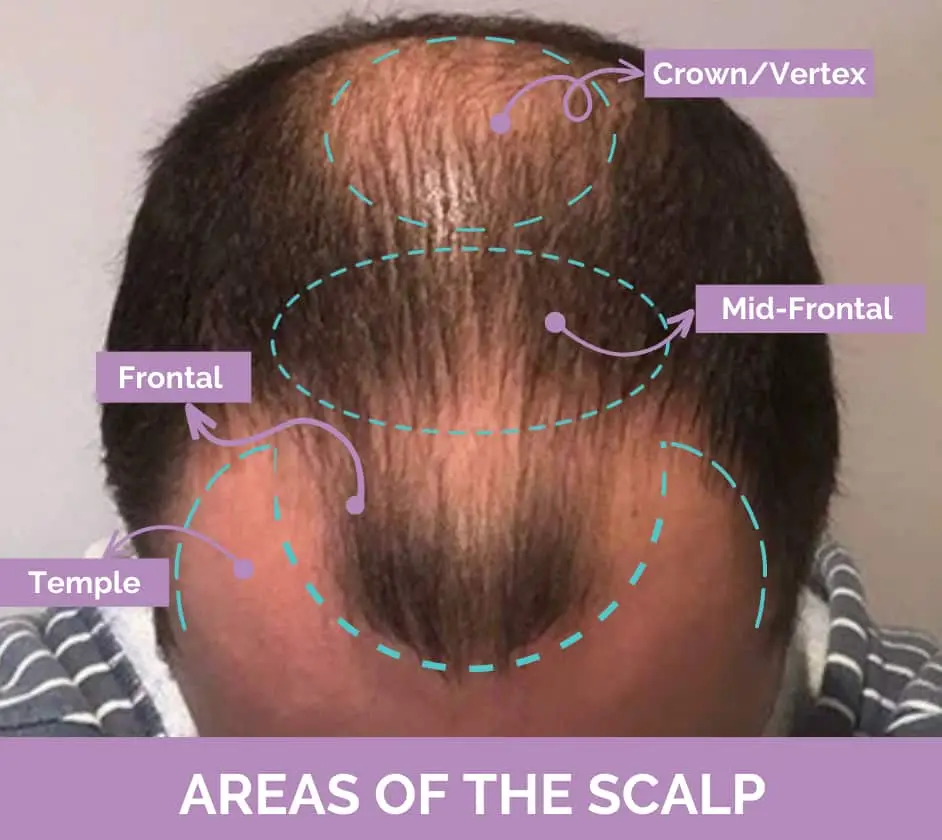
Temples are on the side of the scalp
It should be noted that, in general, the density of the hair in the temples is low, and the hair shaft is thin. For this reason, if you lose your temple hair, it will be quickly more noticeable than hair loss in other areas of the scalp.
What Causes Temple Hair Loss?
Most commonly, temple hair loss occurs due to androgenetic alopecia. As per the Norwood Scale, hair loss in men begins around the temples and crown. In women, however, hair loss is usually diffuse, but some cases involve receding temple hair.
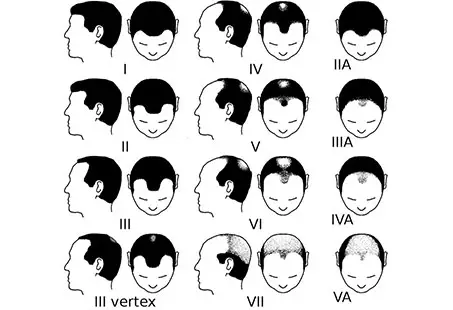
However, pattern baldness isn’t the only cause of temple hair loss. It can also occur due to:
- Traction Alopecia – Tight hairstyles (high ponytail, braids, cornrows, dreadlocks) can cause bald spots in the temple areas.
- Telogen Effluvium – Resulting from physical or emotional stress, telogen effluvium can also cause thinning of the temples.
- PCOS – Polycystic ovary syndrome usually causes hair loss around the temples, along with the front of the scalp.
- Trichotillomania – This hair-pulling disorder can also leave a bald patch in one (or both) of the temples.
- Frontal Fibrosing Alopecia – Commonly affecting women, it can be another cause of temple hair loss.
- Central Centrifugal Cicatricial Alopecia – While it commonly affects the central or crown region of the scalp, it can also cause hair loss in the temples.
- Triangular Alopecia – Believed to run in families, congenital triangular alopecia also causes hair loss at the front and temporal regions of the scalp.
- Malnutrition – Without proper nutrition, you will lose hair, which can also make the temple hair look thinner.
- Medication – Certain medications can cause hair loss, and they can cause thinning along the temples.
- Illness – Infections (ringworm), autoimmune diseases (lupus, alopecia areata), skin problems (seborrheic dermatitis) and hormonal imbalances (thyroid) can all lead to thinning of the temples.
Temple hair loss can be caused by a number of factors at the same time. For an accurate diagnosis, it’s important that you seek the advice of a medical professional.
How To Stop Hair Loss At Temples?
Treatment for temple hair loss depends on the cause.
If you’re losing temple hair due to androgenetic alopecia, you might be recommended minoxidil, finasteride and/or spironolactone. Laser hair growth therapy and PRP therapy for hair rejuvenation can also help, as well as a surgical solution like hair transplantation surgery.
The treatment for traction alopecia can also include minoxidil, though steroids and antibiotics may be prescribed for inflammation and folliculitis.
If the hair loss is due to telogen effluvium, treatment isn’t necessarily required as the condition is self-limiting. Still, you must seek the advice of your doctor as this type of hair loss can occur due to an underlying health issue.
On the other hand, if you’re experiencing hair loss due to polycystic ovary syndrome, you may be prescribed medications, such as spironolactone, birth control pills or even a diabetes medicine. Minoxidil can also be helpful in regrowth, and if the condition has led to permanent hair loss, hair transplant can be another treatment option.
For scarring (cicatricial) alopecias like frontal fibrosing alopecia or central centrifugal cicatricial alopecia treatment options can include steroids, antibiotics, immunosuppressants, minoxidil, etc.
And for temporal hair loss due to congenital triangular alopecia, again minoxidil is a treatment option, though a surgical intervention, such as a scalp reduction surgery or a hair transplant, might possibly be recommended.
For nutritional issues, your doctor may recommend the intake of certain supplements and changes to your diet. And if you believe you’re experiencing hair loss due to a certain medication, it’s important that you consult your doctor about it and not discontinue it on your own.
Can Temple Hair Regrow?
Temple alopecia can be temporary or permanent, depending on the underlying cause of the problem.
For instance, hair loss due to androgenetic alopecia, scarring alopecia (including second-stage traction alopecia) and triangular alopecia are permanent.
However, you can generally expect regrowth to occur if you’re experiencing hair loss due to telogen effluvium, first-stage traction alopecia, a nutritional deficiency or as the side effect of a medication.
In any case, it’s best that you talk to your doctor about it.
How To Hide Temple Hair Loss?
It may be possible to hide temple hair loss with the following:
- Scalp micropigmentation
- Headband, scarves, beanies, and caps
- Hair fibres
Wigs can also help you hide a bald spot in your temple area, but keep in mind they have the potential to worsen hair loss by causing traction alopecia if they’re tight. You must also keep them clean to ensure the health of your scalp.
Hairstyles For Temple Hair Loss
Both men and women can use different hairstyles to hide hair loss in the temporal areas of their scalp. Hairstyles that can help camouflage temple hair loss in females can include:
- Bangs (blunt, curtain, choppy, or side-swept)
- Face-framing layers
- Shaggy bob
- Pixie cut
For men with temple hair loss, a few hairstyles that can hide it include:
- Long hair on top with short-faded sides
- French crop
- Long hair
- Faux hawk
How To Prevent Temple Hair Loss?
Though it’s not always possible to prevent hair thinning at the temples, it is certainly possible in some cases. For that, it’s important that you:
- Do not tie your hair too tightly
- Eat healthy foods and have a healthy lifestyle
- Look for ways to manage and reduce stress
- Be gentle with your hair, and don’t use a lot of harsh products and tools
Experiencing Hair Loss?
Longevita is an award-winning cosmetic treatment provider with over a decade of experience. We offer surgical and non-surgical hair loss solutions in both London and Istanbul at affordable prices. If you’re interested in learning more about our services, feel free to get in touch!
Frequently Asked Questions
Women’s hair thinning at the temples can be attributed to different types of hair loss, including androgenetic alopecia, traction alopecia, telogen effluvium, frontal fibrosing alopecia, central centrifugal cicatricial alopecia and alopecia areata. For an accurate diagnosis, you must get in touch with a medical professional.
Recession of the hairline and temples usually occurs as a result of androgenetic alopecia – a type of permanent hair loss. However, receding temples aren’t always indicative of baldness; for instance, slight temple recession can occur due to hairline maturation which occurs naturally due to ageing.
Research has found the temporal area of the scalp to have the thinnest hair shafts, the greatest percentage of thin hairs and the lowest number of follicular units relative to the hair at the front and in the occipital area.
You can experience hair loss in the temples as a result of stress. Stress can cause different types of hair loss, such as telogen effluvium and alopecia areata, which can affect the temporal hair.
Rogaine, a brand name for minoxidil, is used to treat temple hair loss caused by androgenetic alopecia, traction alopecia, telogen effluvium, and scarring alopecia, among other types of hair loss.
Finasteride can be used to improve the hair in the temple region of the scalp; it is an FDA-approved drug for androgenetic alopecia.
Postpartum hair loss can affect the temporal area of the scalp. Typically, it’s a kind of temporary hair loss that occurs a few months after birth. However, telogen effluvium after childbirth can reveal another existing hair loss problem.
A case study published in Skin Appendage Disorders describes a patient whose underlying traction alopecia was discovered following postpartum telogen effluvium.

Dr Cagla
Dr Cagla earned her medical degree at Trakya University’s Faculty of Medicine in Bulgaria and has almost 6 years of hair transplantation experience. She is a specialist in FUE, DHI and Sapphire hair transplants of the scalp, eyebrows and beard and has performed over 6,000 surgeries. Dr Cagla is multilingual, with fluency in English, Bulgarian and Turkish.
